
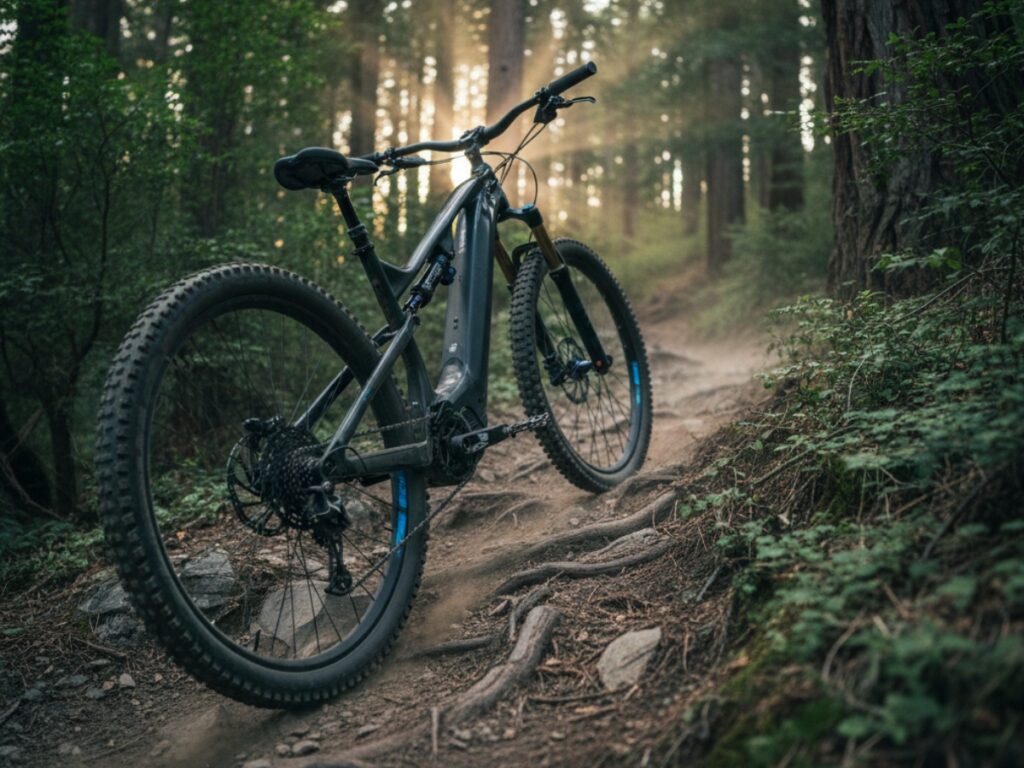
Understanding Core eMTB bike Technology
Before comparing models, you must understand the core technology. The motor and battery system define the bike’s character, range, and legal classification.Class 1, Class 2, and Class 3 Explained
This classification system is the most important factor, as it dictates where you can legally ride your eMTB.- Class 1: This is the standard for almost every eMTB bike. These bikes are “pedal-assist” only. The motor only provides assistance when you are actively pedaling. The assistance cuts off at 20 mph (32 km/h). Most trail systems and bike parks only permit Class 1 eMTBs.
- Class 2: These e-bikes feature a throttle. The motor can power the bike even if you are not pedaling. Class 2 e-bikes are almost universally banned from mountain bike trails and are considered a different class of vehicle.
- Class 3: These are pedal-assist like Class 1, but the assistance continues up to 28 mph (45 km/h). While popular for commuting, they are also banned from most non-motorized trails due to their high speed.
Motor Type: Mid-Drive vs. Hub-Drive
The motor’s location fundamentally changes the bike’s performance and handling.- Mid-Drive Motors: These motors sit at the bike’s crank (the bottom bracket). All premium eMTB bike manufacturers (like Bosch, Shimano, DJI, TQ, and Yamaha) use this design.
- Benefit 1 (Balance): It places the motor’s weight at the lowest, most central point on the bike. This provides excellent balance and handling that feels like a traditional mountain bike.
- Benefit 2 (Performance): The motor applies power directly to the drivetrain. This is highly efficient and allows the motor to leverage the bike’s gears, providing superior torque for climbing.
- Benefit 3 (Sensing): Advanced torque sensors measure your pedaling power and deliver proportional, natural-feeling assistance.
- Hub-Drive Motors: These motors are located in the center of the rear wheel.
- Drawback: This design places heavy, “un-sprung” weight at the rear of the bike, which negatively impacts suspension performance and creates an unbalanced, “pushing” sensation. Hub-drive motors are common on cheap, entry-level e-bikes and are unsuitable for serious trail riding.
Decoding Motor and Battery Specifications
Manufacturers use “torque” and “watt-hours” to market their bikes. Understanding these two numbers is essential for finding the best mountain ebike for your needs.Motor Power (Torque, Measured in Nm)
A motor’s “power” is best measured by its torque, not its “watts.” Torque is the rotational force, or “grunt,” the motor provides. This is what you feel when accelerating and climbing steep hills.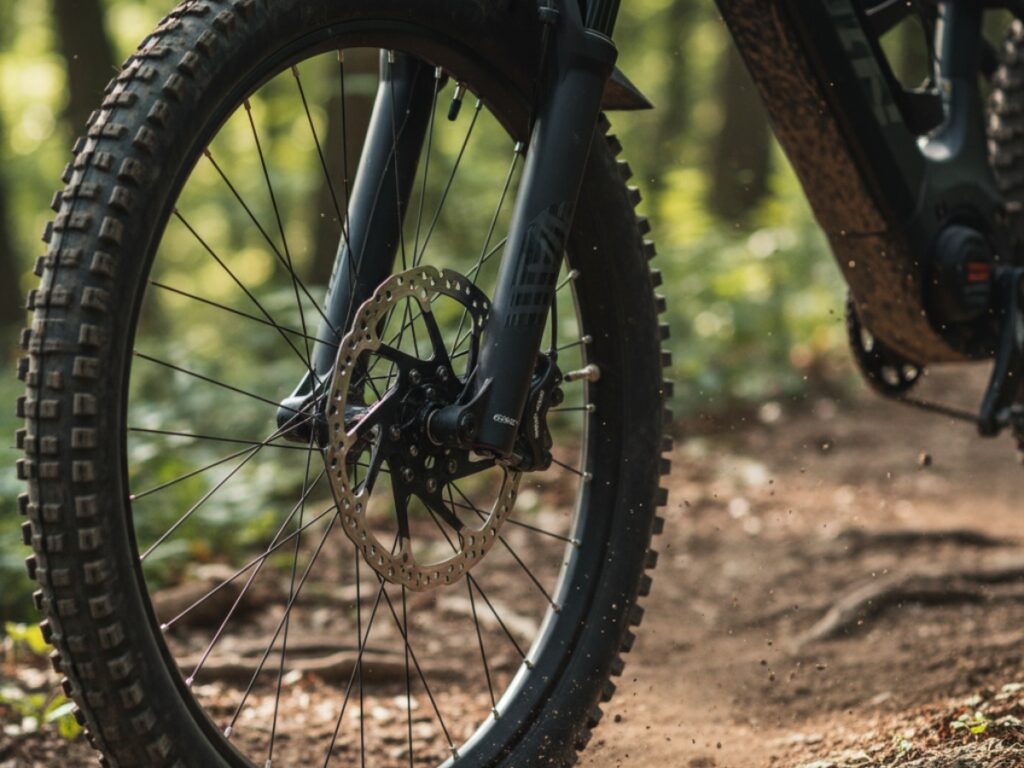
- Full-Power eMTB (torque tiers):
- Shimano EP801: 85 Nm / 600 W — a proven full-power benchmark.
- Bosch Performance Line CX (Gen 5): up to 120 Nm via the free Performance Update 2.0 (May 2026) in the Bosch Flow app — a situational, per-mode figure, up from the 100 Nm base rating.
- DJI Avinox M2S (April 2026): 130 Nm continuous, with a 150 Nm / 1,500 W boost mode.
- This power makes steep climbs feel effortless and provides rapid acceleration. This is the best mountain ebike choice for riders who want maximum assistance.
- Lightweight “SL” eMTB (50 Nm – 60 Nm):
- A newer category, led by systems like the TQ HPR50 and Fazua Ride 60. These bikes use smaller motors and batteries.
- The ride feels more like an analog bike, requiring more rider effort but offering a more natural, “acoustic” ride quality. The bikes are also significantly lighter (38-44 lbs).
- This is a great option for fit riders who want to extend their range rather than replace their effort.
Battery Capacity (Range, Measured in Wh)
The battery is your “gas tank.” Its capacity is measured in watt-hours (Wh). A larger Wh number means a longer potential range.- 500 Wh: This was the standard for years but is now considered small. It’s found on older models, budget-friendly bikes, or lightweight eMTBs.
- 600–800 Wh: The “sweet spot” for all-around trail riding. 800 Wh is now common on full-power 2026 bikes, providing enough energy for 3-5 hour rides with significant climbing. Bosch’s PowerTube 800 (800 Wh) pairs with the 250 Wh PowerMore range extender for 1,050 Wh total.
- 900 Wh+: Some brands offer very large batteries for all-day “epic” rides. The trade-off is increased cost and weight, which can make the bike feel less agile.
Frame and Suspension: A Critical Choice
The power of an eMTB motor puts unique demands on the bike’s frame and suspension.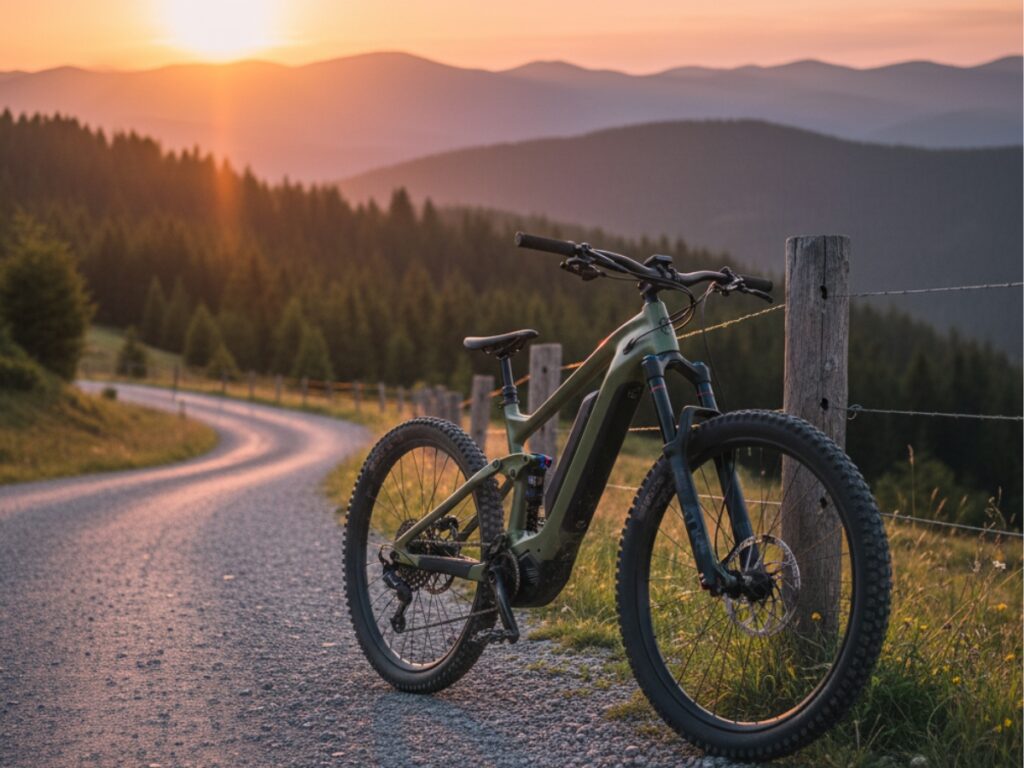
Hardtail vs. Full-Suspension
This is the most common mistake new buyers make.- Hardtail eMTB (Front Suspension Only):
- These are cheaper and simpler. However, the speed and weight of an eMTB make for a harsh and often dangerous ride on a hardtail.
- On descents, the bike’s weight causes the rear end to bounce uncontrollably. On technical climbs, the rear wheel struggles for traction as the motor’s power causes it to spin out.
- Full-Suspension eMTB (Front and Rear Suspension):
- This is essential for a true eMTB bike. The rear suspension (or “shock”) serves two crucial functions:
- 1. Descending Control: It absorbs impacts and keeps the bike stable and predictable at the high speeds an eMTB easily reaches.
- 2. Climbing Traction: It keeps the rear wheel “glued” to the ground, allowing the motor’s torque to be applied without spinning the tire. This lets you climb technical terrain you thought was impossible.
Frame Material: Aluminum vs. Carbon Fiber
- Aluminum: The workhorse material. It is durable, and relatively inexpensive, and its stiffness is perfect for handling the forces of an e-bike. The weight penalty is less of an issue when you have a motor.
- Carbon Fiber: Lighter, stiffer, and better at damping “trail chatter” or small vibrations. It is also significantly more expensive. While a “nice-to-have,” the performance gains are less noticeable on a 50 lb e-bike than on a 25 lb analog bike.
eMTB-Specific Components
You cannot simply put a motor on a regular mountain bike. The added weight (average 48-55 lbs) and motor torque require specialized, stronger components. When searching for the best mountain ebike, check these parts.Brakes
- Requirement: Look for 4-piston hydraulic disc brakes.
- Rotors: Insist on large brake rotors, ideally 200mm or 203mm (front and rear). Some brands use 220mm rotors. Avoid any bike with smaller 180mm rotors.
Drivetrain (Gears)
The motor puts massive stress on chains and cassettes, causing them to wear out quickly.- Requirement: Look for e-bike-specific drivetrains.
- Examples: SRAM “EX1” or “GX Eagle E-Bike” groupsets use a single-click shifter to prevent mis-shifts under power. Shimano’s “Linkglide” (LG) technology uses stronger, more durable cassettes and chains designed to last 3x longer than standard components.
Tires
Tires must support the bike’s weight and provide traction for the motor’s power.- Requirement: Look for wide tires (2.4 – 2.8 inches).
- Casing: The tire’s casing (sidewall) must be robust. Look for “Double Down,” “Super Gravity,” or “e-bike specific” casings to prevent frequent flat tires.
Which Type of eMTB bike is Right for You?
“eMTB” is a broad category. Your choice depends on your local trails and riding style.The Trail eMTB (130mm – 160mm Travel)
This is the “all-rounder” and the best mountain ebike for most people. It balances climbing efficiency with descending capability. It is perfect for general trail center loops, long backcountry adventures, and all-day fun.- Best for: The 90% majority of riders.
The Enduro eMTB (160mm – 180mm Travel)
This is a “gravity-focused” eMTB. It uses the motor to quickly “shuttle” the rider to the top of the most aggressive, steep descents, much like a small ski lift. These bikes are heavy but indestructible.- Best for: Aggressive riders, bike park users, and those who prioritize descending speed.
The Lightweight SL eMTB (130mm – 150mm Travel)
This is the “fitness” eMTB. With a smaller motor and battery, it demands more rider effort but rewards with a playful, agile ride.- Best for: Fit riders, those who ride with analog bike friends, or anyone who finds full-power e-bikes “too much.”
Conclusion: How to Make Your Final Decision
Purchasing an eMTB bike is a major investment, but the right bike will transform your riding experience. Here is your final checklist:- Confirm It’s Class 1: Ensure it is a pedal-assist e-bike with a 20 mph cutoff.
- Demand a Mid-Drive Motor: Choose a bike from a brand using Bosch, Shimano, DJI, TQ, or Yamaha. (Brose motors now appear only on older models.)
- Prioritize Full-Suspension: This is a requirement for safe and effective trail riding.
- Match Battery to Needs: A 600–800 Wh battery is a safe, all-around choice.
- Check Brakes: Insist on 4-piston brakes and 200mm+ rotors.
What does “class 1 / class 2 / class 3” mean for e-MTBs?
Class 1 bikes are pedal-assist only and stop assisting around 20 mph.
Class 2 bikes have a throttle, meaning you can ride without pedaling, but many trails don’t allow them.
Class 3 bikes offer pedal-assist up to around 28 mph, but these are also restricted on most non-motorized trails.
For trail riding, Class 1 is the best and most widely accepted option.
Should I choose a mid-drive motor or a hub-drive motor?
Mid-drive motors are strongly recommended for real trail riding. They are mounted at the crank, offer better balance and handling, and use the bike’s gears efficiently.
Hub-drive motors (placed in the wheel hub) add weight to the wheel and affect suspension performance.
For a proper trail eMTB, mid-drive is the better choice.
What motor and battery specs matter most?
Motor torque (measured in Nm) and battery size (measured in Wh) are key.
Full-power torque now comes in tiers: Shimano EP801 at 85 Nm / 600 W; Bosch Performance Line CX Gen 5 up to 120 Nm via the free Flow-app Performance Update 2.0 (May 2026), a per-mode figure up from the 100 Nm base; and DJI Avinox M2S (April 2026) at 130 Nm continuous with a 150 Nm / 1,500 W boost.
Battery sizes vary:
– 500 Wh: older or budget options
– 600–800 Wh: good all-round performance (800 Wh is now common on full-power 2026 bikes)
– Bosch PowerTube 800 (800 Wh) + 250 Wh PowerMore extender: 1,050 Wh total
– 900+ Wh: long-range but heavier
Actual range depends on rider weight, terrain, and assist level.
Should I buy a hardtail or a full-suspension eMTB?
Full-suspension is recommended for most trail riders.
Hardtails are cheaper but the extra weight and power of an eMTB make the rear end less controlled, especially on descents.
Full-suspension provides better traction, smoother climbing, and safer control.
What components are most important on an eMTB?
Because eMTBs are heavier and more powerful, strong components matter:
– Brakes: 4-piston hydraulic brakes with 200 mm+ rotors
– Drivetrain: e-bike-specific chains, cassettes, and gears built to handle high torque
– Tires: Wide (2.4–2.8 in) with durable casings for better grip and support
What types of eMTBs are available?
There are three main types:
– Trail eMTB (130–160 mm travel): Best all-round choice
– Enduro eMTB (160–180 mm travel): Designed for aggressive descending and bike-park riding
– Lightweight “SL” eMTB (lower power 50–60 Nm): For riders who want a natural, lighter feel with moderate assistance
Choose based on your riding style.
What should I check before buying an eMTB?
A simple checklist:
Make sure the bike is Class 1.
Check for a reliable mid-drive motor (Bosch, Shimano, DJI, TQ, or Yamaha).
Prefer full-suspension for trail use.
Choose battery size based on your ride length (600–800 Wh is a safe option).
Ensure strong brakes and durable components.
Always test-ride before deciding.