
Class 1 vs Class 2 vs Class 3 eBike comes down to two things: whether the bike has a throttle, and how fast the motor keeps helping you. Class 1 is pedal-assist only, with motor help ending at 20 mph. Class 2 adds a throttle that moves the bike without pedaling, but the motor still stops helping at 20 mph. Class 3 is pedal-assist up to 28 mph, usually with no throttle. Class 1 gets the widest access — most bike paths and many mountain bike trails welcome it. Class 2 is welcome on streets and bike lanes but is often banned from paths and trails because of the throttle. Class 3 is the fastest and the most restricted: it is usually limited to roads and bike lanes, needs a helmet in most states, and riders are usually 16 or older. If you buy the wrong class for where you ride, you can be turned off a trail, fined, or stuck with a bike you cannot legally use on your favourite route — so check the class before you buy, not after.
That one decision — which class — matters more than motor brand, battery size, or price, because it decides where you are legally allowed to ride. This guide explains each class in plain English, shows exactly where each one can go, and walks through the state rules that surprise riders most, so you can pick the class that fits your riding, not just your budget.
Class 1 vs Class 2 vs Class 3 eBike at a Glance
| Class | Throttle? | Motor assists up to | Typically allowed | Extra rules |
|---|---|---|---|---|
| Class 1 | No — pedal-assist only | 20 mph (32 km/h) | Streets, bike lanes, most paved paths, many natural-surface trails | Fewest restrictions; no licence in most states |
| Class 2 | Yes — throttle and pedal-assist | 20 mph (32 km/h) | Streets and bike lanes; many paved paths, but often banned from trails | No licence in most states; throttle bans on some paths |
| Class 3 | Usually no (varies by state) | 28 mph (45 km/h) | Streets and bike lanes; usually banned from paths and trails | Helmet required in most states; minimum age 16 in most states; speedometer required |
The pattern is simple: Class 1 almost always, Class 2 sometimes, Class 3 rarely — at least when it comes to paths and trails. On the road, all three classes are treated much the same.
What Is a Class 1 eBike?
A Class 1 eBike is pedal-assist only. The motor only engages while you are actively pedaling, and it stops adding power once you hit 20 mph. There is no throttle — if you stop pedaling, the motor stops helping. You can always pedal faster than 20 mph under your own power; the 20 mph cap is only on what the motor will do for you.
Because there is no throttle and the speed is modest, Class 1 is the most widely accepted class in the United States. It is the one most likely to be allowed on shared-use paths, in bike lanes, and even on many mountain bike trails where other e-bikes are banned. Almost every electric mountain bike sold by mainstream brands — Specialized, Trek, Giant, Orbea, Canyon — is a Class 1 bike, and that is not an accident: trail managers trust Class 1 because it behaves most like a regular bicycle.
Class 1 is the right pick if you ride trails, shared paths, or a mix of both. It is also the safest choice if you are not sure about your local rules yet, because it is the configuration accepted in the most places across the country.
What Is a Class 2 eBike?
A Class 2 eBike shares Class 1’s 20 mph assist ceiling but adds one big thing: a throttle. With a thumb lever or twist grip, you can move the bike on motor power alone, without pedaling at all. Most Class 2 bikes also have pedal-assist modes, so you can ride them like a Class 1 when you want to — but the throttle is always there.
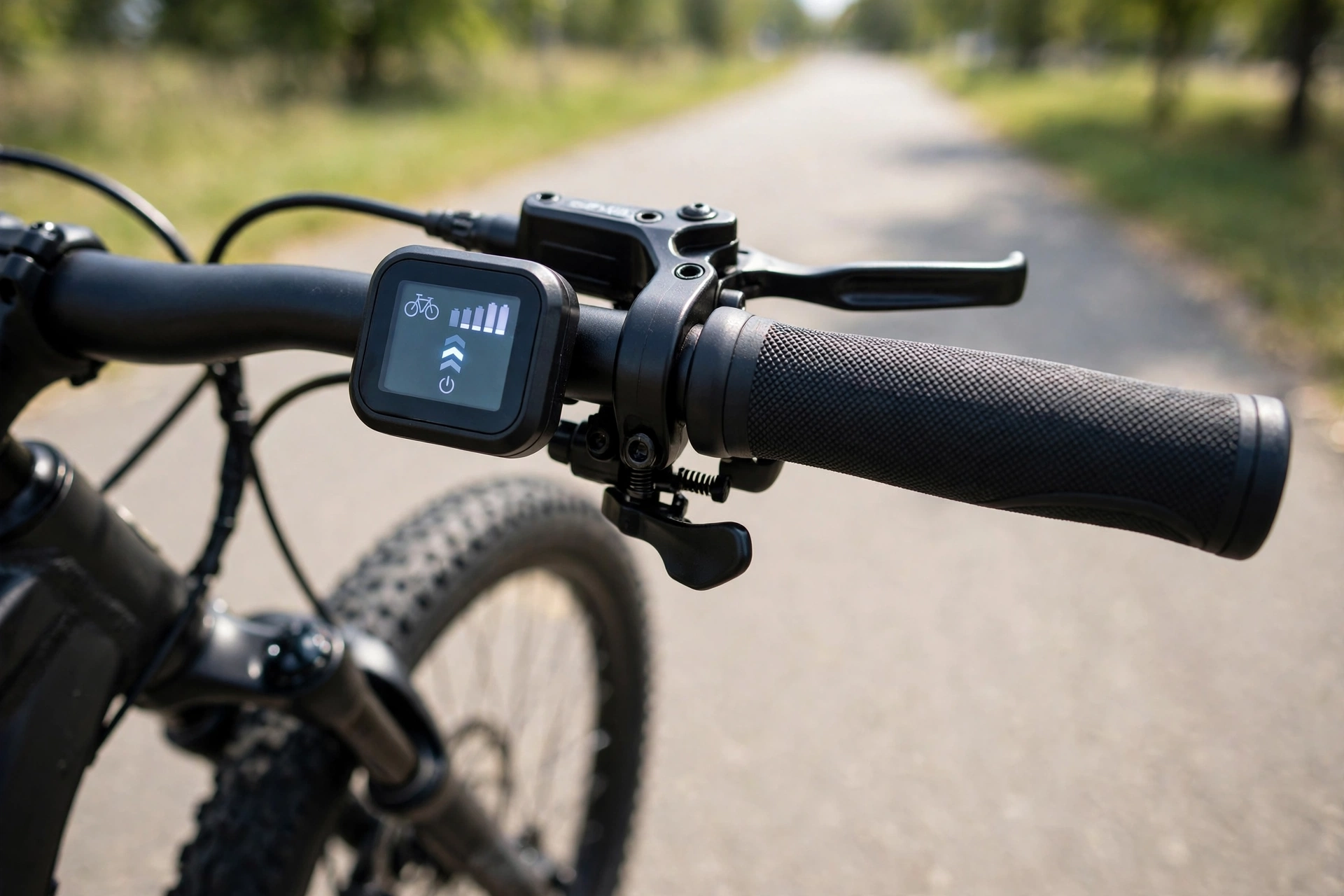
The throttle is genuinely convenient. It helps you pull away from a stop, climb a short hill without shifting down, or cruise home when your legs are done. It is also the feature that gets Class 2 banned from places Class 1 can go. Some unpaved trails and paved multi-use paths ban throttle bikes specifically, because a throttle lets a rider move at full speed without pedaling, which trail managers see as closer to a moped than a bicycle.
On city streets and most paved paths, a Class 2 is generally treated the same as a Class 1. The restriction shows up off-road and on shared paths. If your riding is mostly commuting and errands on streets and bike lanes, Class 2 is a great pick. If you plan to ride singletrack or busy multi-use paths, check the local rules first — the throttle may keep you out.
What Is a Class 3 eBike?
A Class 3 eBike — sometimes called a speed pedelec — is built for speed and keeping pace with urban traffic. It is typically pedal-assist only, with no throttle in most states (a few states allow a throttle capped at 20 mph), and the motor keeps assisting all the way up to 28 mph.
That extra speed is why Class 3 carries extra rules. Most states that recognise Class 3 require a helmet, set a minimum rider age of 16, and require a speedometer on the bike. And because they are faster, Class 3 bikes are frequently barred from the shared paths and trails where Class 1 bikes are welcome — they are often restricted to roads and on-street bike lanes.
Class 3 is the commuter’s pick. If you ride 10–20 miles to work on roads and bike lanes and want to keep up with traffic at 28 mph, nothing else in the class system does the job. Just do not buy one expecting to ride it on your local rail trail or mountain bike network — in most places, that is exactly where it is not allowed.
Two Rulebooks: Federal Law vs State Law
Here is the part most guides skip, and it explains why the rules feel so confusing: there are really two rulebooks, and they do different jobs.
Federal law (15 U.S.C. § 2085) only governs how an e-bike is built. It defines a low-speed electric bicycle as a two- or three-wheeled vehicle with fully operable pedals and an electric motor of less than 750 watts, whose motor stops helping above 20 mph. That federal definition decides what counts as a bicycle for product safety purposes — it does not decide where you can ride it.
Your state governs how you ride it. Path access, speed limits, helmets, age limits, and whether a throttle is allowed are all state (and often city, county, or park) decisions. Roughly 36 states plus Washington, D.C. have adopted some version of the three-class system, based on a model bill promoted by PeopleForBikes starting in 2015. But each state wrote its own version, and the details differ — which is why a Class 3 bike that is legal on a bike path in California can be banned from the same kind of path in Arkansas.
The practical takeaway: federal law tells you the bike is a bicycle, not a motorcycle. State and local law tells you where that bicycle is allowed. Always check the local rules for the specific path, trail, or park you plan to ride.
Where Can You Ride Each Class?
This table is the one to bookmark. It shows the usual position in states that follow the three-class system — but a city, county, or land manager can always be stricter, so treat this as the default, not a guarantee.
| Where you ride | Class 1 | Class 2 | Class 3 |
|---|---|---|---|
| Streets and roads | Yes | Yes | Yes |
| On-street bike lanes | Yes | Yes | Yes |
| Paved multi-use paths (rail trails, greenways) | Usually yes | Often yes, but throttle bans exist | Often banned |
| Natural-surface mountain bike trails | Often yes | Usually banned | Usually banned |
| State and national park trails | Varies by park — Class 1 only in many | Usually banned | Usually banned |
| Sidewalks | Usually banned for all classes | Usually banned for all classes | Usually banned for all classes |
Two things stand out. First, the road is the great equaliser: on streets and bike lanes, all three classes are welcome almost everywhere. The differences only appear when you leave the road. Second, sidewalks are off-limits for all three classes in most cities — an e-bike belongs on the road or the path, not the pavement.
The other thing to remember is that “usually” does a lot of work in this table. A trail system can allow Class 1 on some trails and ban all e-bikes on others. A city can allow Class 3 on its bike lanes but ban it from its riverfront path. The only way to be sure about a specific route is to check the signs at the trailhead and the land manager’s website before you ride.
State Rules That Surprise Riders (2025–2026)
The class system looks uniform on paper, but the states that surprise riders most are the ones that broke from the model. Here are the ones worth knowing before you buy or travel with your bike.
California opened its paths to all three classes. California used to ban Class 3 from paved bike paths statewide. AB 1909, effective January 1, 2023, removed that carve-out, so all three classes are now permitted on Class I separated bike paths by default unless a local jurisdiction specifically bans them. California riders still need to watch local rules — a city or park can still restrict access — but the statewide default is now the most permissive in the country.
Arkansas state parks are Class 1 only on trails. In Arkansas, state parks ban Class 2 and Class 3 from mountain bike trails and from paved and unpaved multi-use trails; only Class 1 may ride them. All three classes are allowed on park roads. If you are planning an Arkansas riding trip, bring a Class 1 or plan to stay on the roads.
New York City capped all e-bikes at 15 mph. A rule effective October 24, 2025 capped all e-bikes, regardless of class, at 15 mph on streets, bike lanes, and park paths in New York City. New York is also an outlier in the class system itself: its Class 3 permits throttle or pedal-assist up to 25 mph, and is legal only in cities over one million people — which in practice means New York City.
Massachusetts does not recognise Class 3 at all. Massachusetts’ three-class statute only recognises Class 1 and Class 2, so a 28 mph e-bike bought in-state falls outside the bicycle framework and can be treated as a motor vehicle, with the licence, registration, and insurance requirements that follow. If you live in Massachusetts and want a fast commuter, check the current statute before you buy.
Your state may not use classes at all. A handful of states have no three-class law, or use their own definitions. In those states, the rules are often older, vaguer, and more likely to treat a fast e-bike as a moped or motor-driven cycle. If your state is one of them, the class label on the bike matters less than the motor wattage and top speed — and a quick check with your state cycling association is worth more than any general guide.
These examples are a snapshot, not a legal database. Laws change — New York City’s 15 mph cap is barely a year old — so check your state’s current statute and your local park rules before you ride somewhere new.
Which Class Should You Buy?
Match the class to how you actually ride, not to the spec sheet. This decision table covers the most common riders:
| You ride mostly… | Best class | Why |
|---|---|---|
| Mountain bike trails and singletrack | Class 1 | The only class most trail systems allow; every mainstream eMTB is Class 1 |
| Shared paved paths and greenways | Class 1 | Widest path access; no throttle to get you banned |
| City commuting on roads and bike lanes | Class 3 | 28 mph keeps pace with traffic; path bans rarely matter on a road commute |
| Errands, cruising, and easy starts | Class 2 | Throttle helps at stops and on hills; fine on streets and most paths |
| A mix of paths and roads, unsure of local rules | Class 1 | Safest default — accepted in the most places |
| Long-distance road riding | Class 3 | Higher assist speed means shorter travel time over 10+ miles |
If you are buying an eMTB, the decision is usually made for you: our guide to buying an eMTB explains why mainstream trail bikes are Class 1, and our post on whether Class 3 eMTBs are allowed on trails goes into the trail-access rules in detail. If you are buying a commuter and your route is all roads and bike lanes, Class 3 is the one that earns its price. And if you want a throttle, accept the trade-off: convenience on the street, restrictions on the trail.
How to Check Your Bike’s Class Before You Buy
Do not rely on the product page headline — check these three things before you hand over money:
- Look for the class label. In states that follow the three-class system, the law usually requires a permanent label on the bike stating its class, top assisted speed, and motor wattage. It is often on the frame near the bottom bracket or on the rear of the bike. If there is no label, ask the seller — a reputable brand will state the class plainly.
- Read the motor cut-off, not the top speed. A bike that can pedal to 35 mph downhill is not a Class 3 bike; what matters is the speed at which the motor stops helping. Class 1 and 2 cut off at 20 mph, Class 3 at 28 mph. Check the spec sheet for “motor assist up to” or “max assisted speed”.
- Check the throttle in the spec sheet. “Throttle” or “thumb throttle” in the spec list means Class 2 (or a Class 3 variant in a few states). “Pedal-assist only” or “torque sensor, no throttle” means Class 1 or Class 3 — the cut-off speed tells you which.
- Confirm the motor wattage. The federal definition caps a low-speed e-bike at 750 watts nominal. A bike with a much bigger motor may not count as an e-bike at all in your state, whatever class the seller claims. This is the spec that catches out buyers of high-powered “e-bikes” sold online.
- Check your trail or path rules with the class in hand. Once you know the class, a two-minute check of your local trail system or park website tells you whether the bike you want is actually allowed where you plan to ride it.
If a seller cannot or will not tell you the class, treat that as a warning sign. Legitimate brands — Bosch, Shimano, Specialized, Trek, and the rest — state it clearly.
What Happens If You Ride the Wrong Class?
The consequences depend on where you are and who catches you, but they are real:
- On a trail, a ranger or trail steward can ask you to leave, and repeat offences can lead to fines. More importantly, e-bike violations are one of the reasons trail systems ban e-bikes entirely — riding a Class 2 or 3 where only Class 1 is allowed puts access at risk for every e-bike rider.
- On a path or in a park, fines vary by city and park, but they exist — and some cities now enforce speed limits on paths with radar and tickets.
- On the road, riding a bike that your state treats as a motor vehicle (for example, a 28 mph bike in a state with no Class 3 law) without a licence, registration, or insurance can mean a much bigger fine than a trail ticket.
- After a crash, the class can matter for insurance. If you were riding a bike your state classes as a motor vehicle, or riding a class that was banned from that path, an insurer may dispute the claim.
None of this is meant to scare you off e-bikes. The rules are manageable — pick the right class, check the signs, and ride within the limits, and you will never have a problem. The riders who get into trouble are almost always the ones who bought first and checked later.
eMTB Riders: Why Class 1 Wins on Trails
If you ride an electric mountain bike, Class 1 is not just the best choice — it is usually the only choice that works on trails. Trail systems that allow e-bikes at all almost always allow Class 1 only, and ban Class 2 and 3 outright. That is why every mainstream eMTB — from the Specialized Turbo Levo to the Trek Rail to the Orbea Wild — ships as a Class 1 bike with a mid-drive motor and no throttle.
It is also why the class question matters before you buy an eMTB, not after. A high-powered online “eMTB” with a throttle and a 1,000-watt motor may look like a bargain, but if it is not a Class 1 bike, it is not welcome on the trails you bought it for. Our eMTB buying guide covers motors, batteries, and geometry in detail, and our post on how long an eMTB battery lasts will help you size the battery for the trails you ride. Get the class right first, and the rest of the buying decision gets much easier.
The Bottom Line
Class 1 vs Class 2 vs Class 3 eBike is a choice about access, not just speed. Class 1 — pedal-assist to 20 mph — is the most versatile: it goes on the most paths and trails, carries the fewest extra rules, and is the right pick for trail riders and anyone unsure of local law. Class 2 adds a throttle at the same 20 mph cap: great for commuting and errands, but the throttle keeps it off some paths and trails. Class 3 — pedal-assist to 28 mph — is the fastest and the most restricted: the commuter’s pick for roads and bike lanes, with helmet and age rules and frequent path bans.
Buy the class that fits where you ride. Check the label, check the cut-off speed, check your local trail and path rules, and you will end up with a bike you can actually ride everywhere you planned to — instead of one that has to stay on the road.
FAQs: Class 1 vs Class 2 vs Class 3 eBike
Do I need a licence for a Class 1, 2, or 3 eBike?
In most states that follow the three-class system, no — no licence, registration, or insurance is required for any of the three classes. The exception is in states that do not recognise a class (Massachusetts has no Class 3, for example), where a fast e-bike can be treated as a motor vehicle. Check your state’s statute if you are unsure.
Can I ride a Class 3 eBike on a bike path?
Usually not. Class 3 bikes are typically banned from paved multi-use paths and trails, and restricted to roads and bike lanes. California is the notable exception: since AB 1909 (2023), all three classes are allowed on Class I bike paths by default unless a local jurisdiction bans them. Always check the local rules for the specific path.
Is a throttle legal on an e-bike?
Yes, on a Class 2 e-bike — the throttle is what defines Class 2. But throttles are exactly what many trails and multi-use paths ban, so a Class 2 bike is welcome on streets and bike lanes but often restricted off-road. In most states, a Class 3 bike may not have a throttle (a few states allow one capped at 20 mph).
How do I tell what class my e-bike is?
Check the label on the frame — three-class states usually require a permanent label stating the class, top assisted speed, and motor wattage. You can also check the spec sheet: pedal-assist only with a 20 mph cut-off is Class 1; a throttle with a 20 mph cut-off is Class 2; pedal-assist with a 28 mph cut-off is Class 3.
Can I change my e-bike’s class?
Some bikes let you change the assist limit in an app, but changing the class is not just a software setting — the class is a legal designation tied to the bike’s label and specification. Reprogramming a Class 1 bike to assist to 28 mph can make it a Class 3 bike (or an unclassified motor vehicle) in your state’s eyes, with different rules and path access. Do not assume a settings change is legal; check your state law first.
Which e-bike class is best for trails?
Class 1, by a wide margin. Trail systems that allow e-bikes almost always allow Class 1 only. Every mainstream electric mountain bike is a Class 1 bike for exactly this reason. If trails are your main riding, buy Class 1 and do not look back.
Disclaimer: This guide is general information, not legal advice. E-bike laws vary by state, city, county, and land manager, and they change frequently. Always check your state statute and the rules for the specific road, path, trail, or park before you ride.