
To maintain an eMTB, clean it after every muddy ride, keep the battery charged between 20% and 80%, lubricate the chain weekly, check tyre pressure and brakes before every ride, and book a professional service every 6 to 12 months. An eMTB is heavier and harder on its drivetrain, brakes, and suspension than a regular mountain bike, so a short routine after each ride prevents most expensive repairs. This guide covers the full routine: cleaning, battery care, motor care, drivetrain, brakes, suspension, and a servicing schedule you can follow.
An electric mountain bike is a bigger investment than a regular mountain bike, and the motor and battery are the parts that cost the most to replace. A battery alone can cost $500 to $900, and a motor replacement can run over $1,000. Most of that damage is preventable. Mud left on the drivetrain grinds the chain and cassette. A battery left flat for months loses capacity. A motor caked in mud overheats. The fixes in this guide take minutes, not hours, and they are the difference between a bike that lasts five seasons and one that needs a new drivetrain every year.
If you are still choosing a bike, read our ultimate guide to buying an eMTB first — the motor, battery size, and frame you pick decide how much maintenance you will be doing. And if you want the numbers behind battery life, our guide to how long an eMTB battery lasts explains range, charging, and replacement costs in detail.
How to Maintain an eMTB: The Routine at a Glance
Maintenance falls into three rhythms: after every ride, weekly, and seasonally. You do not need a workshop. A bucket, a soft brush, bike cleaner, chain lube, a tyre pump, and a torque wrench cover almost everything below.
Maintenance schedule:
| When | What to do | Time |
|---|---|---|
| After every ride | Wipe down frame and motor area, clean and lube the chain, check tyres and brakes | 10–15 min |
| Weekly | Full wash, drivetrain degrease, check bolts, suspension sag, firmware check | 30–45 min |
| Monthly | Brake pad and rotor check, tyre wear, spoke tension, battery contacts clean | 30 min |
| Every 6 months | Professional service: suspension lower-leg service, brake bleed, drivetrain wear check | Shop visit |
| Annually | Full suspension service, motor diagnostics, battery health check | Shop visit |
How to Clean an eMTB Safely
Cleaning is the single most important maintenance habit, and it is also where most owners damage their bikes. Never use a pressure washer. A high-pressure jet forces water past seals into the motor, battery mount, and bearings, and that damage is not covered by warranty.
Step 1 — Power off and remove the battery. Switch the bike off and take the battery out if it is removable. This protects the contacts and stops water getting into the battery housing. Cover the battery mount and display with a plastic bag or a clean cloth if you are washing near them.
Step 2 — Rinse gently. Use a garden hose on a low setting or a bucket of water. Wet the whole bike to loosen mud, working from the top down so dirt runs off instead of into bearings.
Step 3 — Wash the frame and wheels. Spray on a bike-specific cleaner (dish soap strips grease from bearings and is not a substitute) and let it sit for a minute. Scrub the frame, fork, wheels, and tyres with a soft brush. For the motor area, wipe with a damp cloth only — do not spray cleaner directly into the motor housing or around the bottom bracket.
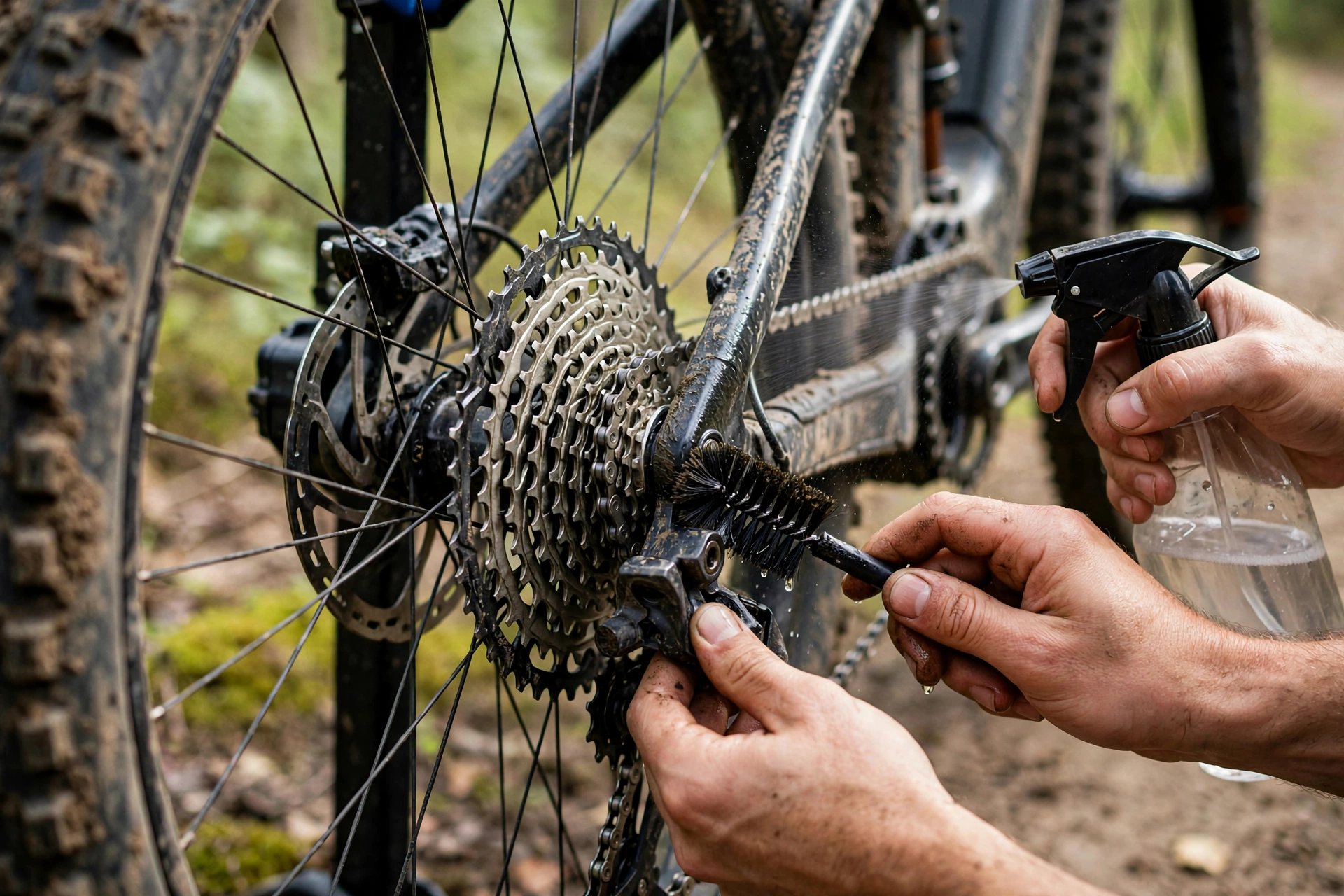
Step 4 — Degrease the drivetrain. Apply degreaser to the chain, cassette, chainring, and derailleur jockey wheels. Scrub with a stiff brush, then rinse. The drivetrain takes the most punishment on an eMTB because the motor adds torque through the chain, so this step matters more here than on a regular bike.
Step 5 — Dry everything. Dry the bike with a clean cloth, paying attention to the chain, bolts, and electrical contacts. Bounce the bike a few times to shake water out of the frame. Let it air-dry for 10 minutes before lubricating.
Step 6 — Lubricate the chain. Apply one drop of bike chain lube per link, spin the cranks backwards a few times, then wipe off the excess. Too much lube attracts dirt; too little lets the chain rust. Use wet lube in winter and dry lube in dry, dusty conditions.
eMTB Battery Care: Charging, Storage, and Lifespan
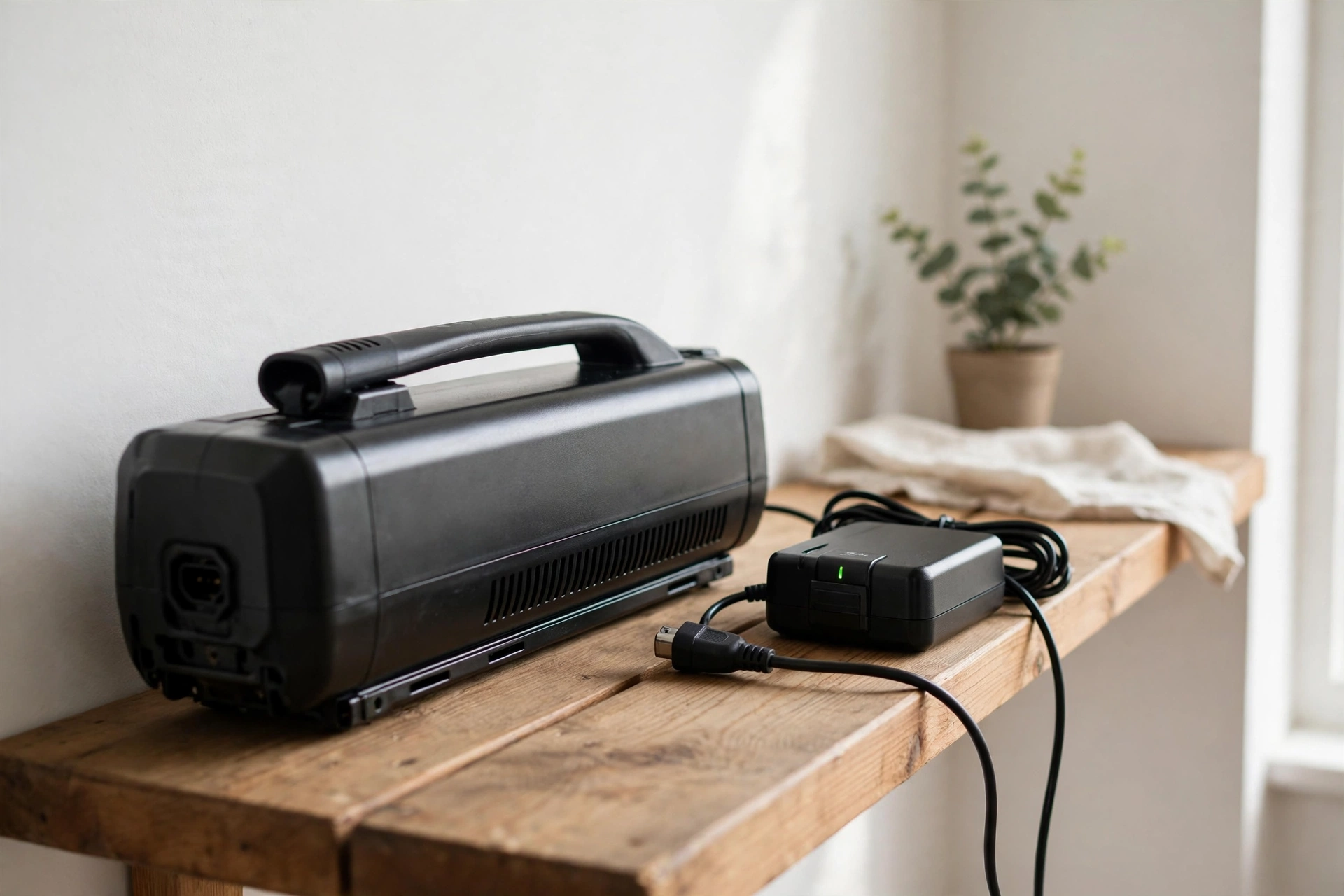
The battery is the most expensive part of your eMTB, and how you charge and store it decides whether it lasts two years or five. Our full guide to how long an eMTB battery lasts covers range and replacement costs — here is the care routine that keeps it healthy.
Charge between 20% and 80%. Lithium-ion batteries degrade fastest at the extremes. Recharge when the battery drops to around 20–30%, and unplug it before it sits at 100% for days. Charging to 100% the night before a ride is fine; leaving it at 100% for a week is not.
Use the manufacturer’s charger. Third-party chargers may not match your battery’s voltage or charge profile. Bosch, Shimano, and DJI all warn that the wrong charger can damage cells and void the warranty. Keep the charger dry and do not charge in a freezing garage.
Store at 40–60% charge. If you will not ride for several weeks — winter storage, for example — charge the battery to about half, remove it from the bike, and store it indoors at 10–20°C. Check it every two months and top it back up to around 50% if it has dropped.
Keep the contacts clean. Wipe the battery terminals and the mount contacts with a dry cloth once a month. Corrosion or dirt on the contacts causes power cut-outs that look like motor faults but are a five-second fix.
Watch for warning signs. Stop riding and get the battery checked if you see swelling, cracks, leaking fluid, a smell of chemicals, or the battery getting hot while charging. A damaged lithium battery is a fire risk — do not charge it indoors and contact your dealer.
Battery care:
| Battery habit | Do this | Avoid this |
|---|---|---|
| Daily charging | Recharge at 20–30%, unplug near full | Running to 0% every ride |
| Storage | 40–60% charge, indoors, 10–20°C | Fully charged or flat in a cold garage |
| Charging | Manufacturer’s charger, dry room | Third-party fast chargers |
| Winter | Check every 2 months, top up to ~50% | Leaving it untouched for 6 months |
| Contacts | Wipe monthly with a dry cloth | Spraying cleaner on terminals |
Motor Care: What You Can Do and What Needs a Shop
The motor is sealed, and you should not open it. But three things you do yourself keep it running well.
Keep the motor area clean. Mud and grit build up around the bottom bracket where the motor sits. Wipe it with a damp cloth after muddy rides and clear debris from around the motor housing. A caked motor runs hotter and works harder.
Update the firmware. Bosch, Shimano, and DJI all release firmware updates that change power delivery, fix bugs, and sometimes add range. Bosch’s 2026 firmware update for the Performance Line CX Gen 5 raised peak output to 120 Nm and 750 W. Check for updates in your bike’s app (Bosch eBike Flow, Shimano E-TUBE, DJI Avinox app) every month or two, and install them before a big ride, not the night before.
Listen for changes. A motor that starts whining, clicking, grinding, or cutting out under load needs a professional diagnosis. Riding through a motor fault turns a small repair into a replacement. The same applies to error codes on the display — note the code and call your dealer instead of guessing.
Drivetrain, Brakes, and Tyres: The Wear Items
An eMTB wears its drivetrain faster than a regular mountain bike. The motor adds torque, the bike is heavier, and you climb more in the same ride. Expect a chain to last 1,500–2,500 km on an eMTB, roughly half what a regular mountain bike chain manages.
Chain and cassette. Check chain wear monthly with a chain checker tool (under $15). A worn chain chews through the cassette and chainring, so replacing a $30 chain on time saves a $150 cassette. Clean and lube the chain after every muddy ride and at least once a week in dry conditions.
Brakes. E-MTBs are heavier and faster, so brake pads wear faster too. Check pad thickness monthly — replace them when less than 1 mm of pad material remains. If the lever feels spongy or pulls to the bar, the brakes need bleeding. Most riders need a brake bleed every 6 to 12 months; get it done at a service rather than learning on your own brakes.
Tyres. Check pressure before every ride — eMTB tyres typically run 20–30 psi depending on tyre width and rider weight, and under-inflated tyres puncture more easily and roll slowly. Inspect for cuts, embedded thorns, and worn tread monthly. Sealant in tubeless tyres dries out every 3 to 6 months, so top it up on schedule or you will find out it is dry at the worst moment.
Suspension. Wipe the fork stanchions and shock shaft after every ride so grit does not scratch the seals. Check sag monthly — if the suspension feels harsh or bottoms out easily, the air pressure or damper needs attention. Suspension needs a lower-leg service every 50 hours of riding (roughly every 6 months for a regular rider) and a full service once a year.
Bolts and spokes. Check the stem, handlebar, axle, and motor-mount bolts monthly with a torque wrench, using the torque values printed on the parts. E-MTB vibration loosens bolts faster than on a regular bike. Pluck the spokes occasionally — a loose or dead-sounding spoke means the wheel needs truing.
When to Service Your eMTB Professionally
Home maintenance covers cleaning and checks. Some jobs belong in a shop, and skipping them is what turns a $100 service into a $600 repair.
Professional servicing:
| Service | When | Typical cost | What it covers |
|---|---|---|---|
| Basic service | Every 6 months | $60–$120 | Full clean, drivetrain check, brake and gear adjustment, bolt torque |
| Suspension lower-leg service | Every 50 riding hours | $80–$150 | New seals and oil, stanchion inspection |
| Full suspension service | Annually | $150–$300 | Damper rebuild, seals, oil, bushings |
| Brake bleed | Every 6–12 months | $30–$60 per brake | Fresh fluid, lever feel restored |
| Motor diagnostics | Annually or on any fault | $50–$100 | Firmware, error codes, bearing check |
| Battery health check | Annually | Often free at dealer | Cell balance, capacity, firmware |
Book the annual service before the riding season starts, not after something breaks. A shop can also spot frame cracks, worn bearings, and motor issues that are invisible to a home check. If your bike is still under warranty, keep service records — manufacturers can ask for proof of maintenance if you claim on the motor or battery.
Winter Storage: Putting Your eMTB Away Properly
If you stop riding for winter, a proper shutdown takes 30 minutes and saves you a spring of problems.
- Wash and dry the bike fully, then lubricate the chain so it does not rust in storage.
- Remove the battery, charge it to about 50%, and store it indoors at room temperature.
- Pump the tyres up slightly above normal pressure so they do not flat-spot.
- Hang the bike or stand it upright in a dry place, away from damp walls.
- Check the battery every two months and top it up to around 50% if it has dropped below 30%.
- Before your first spring ride, check tyre pressure, brake feel, chain lube, and firmware updates — then ride.
5 Mistakes That Shorten an eMTB’s Life
- Pressure washing. Forces water into the motor, bearings, and battery mount. Use a bucket and a hose on low.
- Leaving the battery flat. A battery at 0% for weeks can lose capacity permanently. Store at half charge.
- Ignoring a worn chain. A stretched chain destroys the cassette and chainring. A chain checker costs less than a new cassette.
- Skipping suspension service. Dry seals scratch stanchions, and a scored stanchion means a new fork leg.
- Riding through motor noises. A clicking motor is a warning, not a quirk. Get it diagnosed before it becomes a replacement.
Frequently Asked Questions
How often should I clean my eMTB?
Wipe it down after every ride and wash it properly after every muddy or wet ride. A full wash with drivetrain degreasing once a week is enough for dry-weather riding. Never use a pressure washer — a bucket, a soft brush, and bike cleaner are all you need.
How do I maintain an eMTB battery?
Keep it charged between 20% and 80% for daily riding, use the manufacturer’s charger, store it at 40–60% charge indoors at 10–20°C, and wipe the contacts monthly. Never leave it fully charged or completely flat for weeks, and replace it if it swells, cracks, or overheats.
How often should an eMTB be serviced?
Book a basic professional service every 6 months and a full service once a year, including suspension and motor diagnostics. Suspension needs a lower-leg service every 50 riding hours. If you ride weekly on trails, that usually means a shop visit every spring and autumn.
Can I wash my eMTB with water?
Yes, with low-pressure water from a hose or bucket. Remove the battery first, cover the display and battery mount, and never aim a jet at the motor, bearings, or electrical connectors. Dry the bike thoroughly afterwards and lubricate the chain.
How long does an eMTB chain last?
Typically 1,500–2,500 km, roughly half the life of a chain on a regular mountain bike, because the motor adds torque through the drivetrain. Check wear monthly with a chain checker and replace the chain early — it is far cheaper than a new cassette.
Do eMTB motors need servicing?
The motor itself is sealed and needs no home servicing beyond keeping the area clean and the firmware updated. Book a professional motor diagnostic once a year, or immediately if you hear grinding, clicking, or the motor cuts out under load.
The Bottom Line
Learning how to maintain an eMTB is mostly about consistency, not skill. Clean it after muddy rides, keep the battery between 20% and 80%, lube the chain weekly, check brakes and tyres before you ride, and let a shop handle suspension and motor work once a year. That routine costs a few dollars in cleaner and lube and about an hour a month — and it is what keeps a $4,000 bike riding like new for years instead of wearing out in two seasons.
Disclaimer: This guide covers routine maintenance only. If your battery is swollen, leaking, or overheating, or your brakes or motor are not working properly, stop riding and take the bike to a qualified dealer. Always follow your manufacturer’s manual — torque values, service intervals, and warranty terms vary by brand and model.